

Everyone knows how popular Korea is now on the global map when it comes to online gaming and the gaming market. Before the 2000’s South Korean players were already on the professional circuit. However, the exposure was not so much. So how did South Korea become the best gaming region in the world? South Korea did not only develop gaming as a part of their culture, they went on to establish gaming as a fully functional industry, way before many other countries.
Early History of the Korean Gaming Scene
The earliest references of gaming in Korea can be traced back to 1975, with the installation of Pong Machine Computer TV sets in the Midopa Departmental Store in Seoul. Soon according to rumors, big companies like Samsung and LG started producing new machines same as the Pong, set to give people the latest arcade gaming experience. With the rise of Arcade games throughout the country, people found themselves spending a large time playing the games.
Eventually, Korean companies started manufacturing their own Arcade games and also started exporting these games to other countries which resulted in good revenue. In 2001, a company called Gamevision licensed six arcade games for release in North America. Take-Two Interactive came into the scene by releasing a Game Boy Advance part of Tang Tang developed by GameVision.
In 1985, the advent of Zemmix, MSX based video game console marked the first successful video game hardware launch in the country. In 1987, Korea’s first fully-fledged computer game was launched for the Apple II computer platform. It was widely popular by the name: Legend of the Sword. Korean Company Topia came up with one of the first action role-playing games.
As most of the games were in local languages, TV series adaptations of the same made them even more popular among the young generations. The first breakthrough in commercial Online gaming in the Korean market can be seen with the launch of Nexus: The Kingdom of the Winds. Gradually with time, various initiatives were drawn and before anyone saw it, Korea rose to prominence in the online gaming circuit.
The Rise of Online Gaming Culture
Very soon, Koreans realized their strength in the domain of online gaming and began appreciating the next generation’s hunger for playing video games. Various initiatives were taken in this period to mark the beginning of an awesome gaming journey that has left the world astounded today. In 2001, Korean company Gravity Corp released the sprite-based Ragnarok Online – which gained popularity overnight and took the Asian market by storm.
Why Gaming Became So Popular In Korea?
Many believe that not only in Korea but in the entire South-East Asia region gaming became so popular among teenagers and youth particularly because they had nothing else to do. With very little exposure to the outside world and poverty-driven daily life, education was not easily accessible to many. This led the youth to shift their frustration and focus somewhere else. They needed, what we call – escape-gaming.
According to a report published in the Wired.com, majority of the players who dedicated their time to playing online games are belonging to a not-so-rich background. Although esports was at first considered to be a risky venture, in reality, the youth had little to lose and much to gain. In the same report, it is revealed that going pro offers them the promise of escape from the binding of their society and poverty. In 2018, Park “Saybyeolbe” Jong-Ryeol revealed that he was working as a barista before going pro, and his father used to be a cab driver. Not only Park, but many such pro players later came up with similar confessions about the start of their gaming journey and what made them take up esports in the first place.
Much of this depends a lot on the environment and the opportunity of good schooling for teenagers. Although much of South Korea is a well-educated country, the competition for good education is also very intense. There is a large number of the population who cannot afford to put their children in good schools. Many of these families cannot even afford a private tutor or cram school, stacking the odds considerably against them. But on the other hand, gaming comes cheap. With little to study and time to spend, the majority of the young population started playing games to pass their time.
Read: Top 10 Gaming Companies in the World
The young generation had considerably easy access to the dirt-cheap gaming cafes where they can rent a PC and play games with very little money. This facilitated the rise of gaming professionals in the country, with kids of young age started playing games day in and day out practicing their skills to another level. Most of the professional players who came early before the fuss even started, were built in gaming cafes.
Not only Korea but entire south-east Asia witnessed how gaming cafes became a breeding ground for good, reliable, professional players. And it’s not all talk, because these players were dominating online gaming. Why? Because they can handle the pressure in LANs. That’s all they do, they play in LAN all day.
Talking to the reporter in wired.com, Kim “WizardHyeong” Hyeong-Seok, a coach with Syeol Dynasty has said that gaming offered them an escape from reality so harsh that it even made them contemplate harsh decisions at some point in their life. Many Korean players took up gaming as an escape to cope up with the pressure of society, problems at home, financial instability. Added to this situation, was the rigid belief in academic success as the only legitimate avenue for a good life.
| It is said that becoming a Pro-Gamer is like becoming a K-Pop star in Korea. |
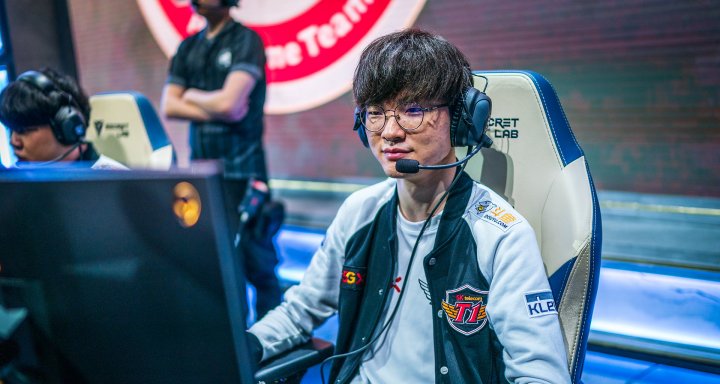
| The title of most popular and greatest pro-gamer in Korea belongs to Lee “Faker” Sang-Hyeok, a professional League of Legend player who has the highest annual income. |
This growing popularity of gaming as a profession helped the growth of gaming culture as a whole in Korea. With increasing player numbers every day, Companies started investing in gaming sectors to reap out more revenue, and very soon esports was no less popular than traditional basketball or soccer.
PC Bangs and the Rise of Gaming as a profession
PC bangs are like Gaming centers where people can come in and play on a computer by renting it for an hourly fee. While Education was expensive, renting a computer to play games was comparatively much cheaper. Therefore the demand for such playing centers started rising in the country, and before one knows it, there was a PC Bang in each block. It particularly attracted the young generation, but the dedication these gamers showed was beyond comprehension. Day in and day out they kept playing by renting computers, as a result of which players from different areas came together and bonded over the love of gaming. This bonding of playing together, sharing strategies, and implementing them in a match is what created the idea of a gaming team. Soon gaming rose from obsession to profession and Korea ignited the fire that went on to light the whole world.
Korea: The Birth of Esports
Many might not know this but Korea is the birthplace of esports culture. With the increasing demand in the gaming sector for newer and more competitive games, Companies invested heavily to promote these games. At the same time, pro players started going live in streams, encouraging others to play the game. In no time players started earning big from professional game streaming. More and more institutions sprang up encouraging the growth of gamers and before one knows, Korea became the gaming capital of the world.
| Two of the most popular games among the Koreans are Starcraft and League of Legends. |
| To stop widespread video game addiction, the Korean government have invested heavily in Health care, clinics, and support Groups |
| OnGameNet(OGN) is one of the top Korean channels that broadcast esports matches and tournaments on TV |
This rise of gaming culture was possible because of several factors. With the substantial growth in player base, different franchises sprang up in support of these players, taking the gaming culture to a new level. Big money was involved in the process and soon whole business started running based on gaming as a profession. Primarily it was this gaming culture of the country that spread out to other countries like China, Europe, and America.
Esports as a culture became so integral to the daily life of the Koreans that the Korean Government soon created the Korean Esports Association to manage esports in Korea. It also became a member of the National Olympic Committee of South Korea. New players who were coming up till this point were only playing games as a recreational activity. Players now started playing professionally. Companies started throwing big money on the table allowing these players to take gaming up as their new occupation.
World’s First Esport Stadium: The Birth of a Professional League
Incidentally, the first Esport stadium in the world was set up in Yongsan, Korea in 2005. This showed the level of importance the Koreans gave to the profession of gaming. Even the Government supported this move as it started revolutionizing the Korean economy. The outside world started adopting Korea’s policies and supported Esports. The craze of the Online gaming profession spread out from Korea to other nations in the world. It became an integral part of Korea’s culture and efforts were made to take this culture up to a new height of development.
Esports began to shine, and very soon Koreans started having their professional league of gaming just like other sports. Broadcasting rights and funding – all came from different places and people went crazy about this new idea. Cable TV channels started showing pro games and slowly this turned into a mini-festival in the country. Different franchises emerged as Pro teams were created to compete in these professional gaming leagues.
The format itself was very competitive. All the players involved started getting salaries each season. With each passing year, the participation list went on increasing and Korean companies started making serious money out of this. Not only players but online viewership of this game started rocketing with each passing year. By 2019, over 450 million people started watching esports and took part in esports events. As a result, the overall Gaming industry started growing in revenue and captured the world market leading from the font.
South Korea showed the whole world what professional gaming is. Not only as a source of entertainment but with a strong avenue of sales and revenue, the gaming market in South Korea is leading the world. Professional leagues, Tournaments and the money involving them is directly inspiring the Korean youth to take part in it more and more. Particularly with the advent of Covid 19 where pretty much everything else took a hit, gaming in Korea prospered even more. Players participated in online tournaments and online viewership of the same was distributed in the whole world.