

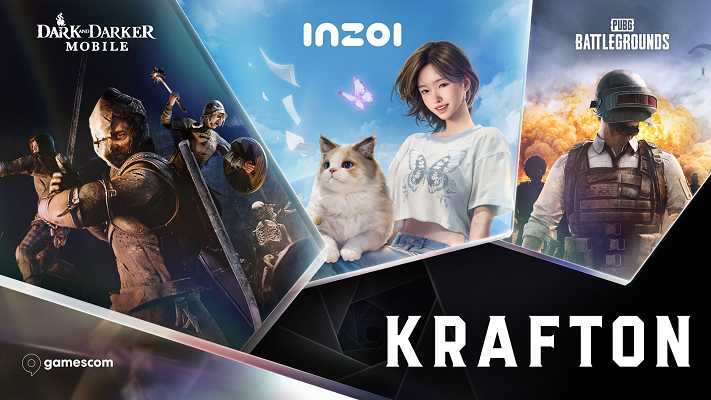
Krafton, the publisher behind global hits like PUBG and InZOI, has recently declared itself an “AI-first company,” putting artificial intelligence at the core of its business, game development, and employee culture.
The South Korean gaming giant committed $69.7 million to a new GPU supercluster and pledged an additional $20.8 million annually in AI training and employee upskilling, placing it at the forefront of a sweeping disruption in the $160 billion global gaming industry.
Krafton CEO Kim Chang-han said on October 23, 2025, that the company will automate workflows around “Agentic AI,” mandating that employees focus on creative tasks and complex problem-solving, while delegating administrative and routine duties to AI systems.
The goal is to complete a company-wide AI transformation by late 2026, building new infrastructure, data pipelines, and R&D flows to accelerate everything from game art creation to bug troubleshooting and HR automation.
“In starting our AI-First strategy, we will expand growth opportunities for every member and lead AI innovation in gaming,” Kim said in an internal statement.
Record Revenue Drives AI Investment
Krafton posted revenue of over $1.1 billion in the first half of 2025, an 11.9 percent increase from the previous year. Mobile games brought in roughly 62 percent of the total haul, while PC titles added $543.2 million. PUBG Mobile kept a robust 113 million monthly active users, but Krafton faces pressure to diversify as legacy franchises mature and competition heats up.
InZOI, Krafton’s AI-enabled life sim and its fastest-selling game ever, sold over a million copies in the first week. This title integrates features like 2D-to-3D object creation and autonomous non-playable characters powered by proprietary AI models, previewing the publisher’s future direction.
Krafton’s transformation centers on Agentic AI—intelligent systems that interpret natural language, make multi-step decisions, and adapt to new information without direct human input. These models will automate everything from mundane code review to playtesting and virtual world creation.
The company invested in a GPU cluster built on NVIDIA’s B300 processors, each delivering up to 15 petaflops and 288 GB of high-bandwidth memory. Krafton expects this will accelerate training for models that handle not just repetitive work, but also dynamic in-game events and content creation.
Industry Trends and Divided Workforce
Krafton’s shift mirrors industry-wide AI adoption. A 2025 Google Cloud survey found that 90 percent of game studios already use AI tools, and 52 percent explicitly reported integrating generative AI. Major rivals like Electronic Arts, Ubisoft, and Square Enix also built internal AI tools for code, art, and world-building, but none matched Krafton’s blanket AI-first reorganization.
However, the developer community remains wary. According to the Game Developers Conference 2025 survey, 30 percent of game creators view generative AI’s impact as negative, with concerns citing quality control, job displacement, and copyright issues. Narrative specialists and artists feel especially vulnerable, as automation targets their roles first. GDC survey data shows 11 percent of developers faced layoffs in 2024, with 19 percent coming from narrative teams alone.
At some studios, executives require daily use of AI tools, but nearly half of surveyed developers believe the tech threatens creative integrity and long-term job security.
Risks, Limitations, and Hopes
Krafton’s $90 million bet — about 6 percent of its 2024 revenue — positions the company to lead in productivity and creative capability. By integrating AI at every operational level, Krafton aims to reduce development time, optimize costs, and experiment with features that no human team could build alone, such as truly adaptive NPCs and dynamic environments tailored to player behavior.
Even so, the transition faces hurdles. Agentic AI still struggles with context, nuance, and quality control. Krafton’s commitment to proprietary, copyright-safe training data means its AIs have smaller datasets than those of cloud rivals, limiting their “creativity” compared to models trained on the open web.
The new B300 GPUs, despite their power, demand significant energy and raise questions about environmental impact, with each eight-GPU system drawing up to 14 kilowatts.
Krafton’s workforce also stands at a crossroads. The company has promised to “reorganize” teams and workflows, but has provided few assurances about long-term employment or which roles will be directly automated.
Implications for Players and Startups
Krafton’s move raises the stakes for the entire gaming ecosystem, from indie startups to global platforms. On one hand, accessible AI tools can help small teams compete by rapidly generating assets and code, lowering barriers to entry. On the other hand, industry consolidation around advanced in-house AI may deepen the divide between resource-rich giants and scrappy upstarts.
For players, AI has already begun to transform core experiences—enabling dynamic difficulty, evolving NPC behavior, and procedurally generated, infinite in-game worlds. Krafton’s push could accelerate these shifts, ushering in a new era of games that adapt on the fly to each player’s style and preferences.
Krafton’s AI-first bet signals the start of gaming’s most profound transformation since the rise of 3D graphics and online play. If the company’s gamble pays off, expect rival publishers and studios to follow if pitfalls abound—through layoffs, lower creative standards, or backlash—the industry may have to rethink its reliance on automation.
For now, Krafton’s AI leap marks a defining moment, as gaming’s future quickly pivots from human-driven artistry to an era where intelligent, adaptive machines could shape every pixel, story, and experience ahead.
Get the hottest news on upcoming game releases, patch updates, and gaming industry trends, stay updated with KoreaGameDesk on Twitter, Facebook, Instagram and Linkedin
More from us:
- All About League of Legends New Champion, K’Sante: Teaser, Gameplay, and Release Date
- Nexon game’s Veiled Experts opens up final beta test signups with a new trailer
- South Korean eSports Team Bags Gold in Asian Games, Captures Global Attention
- VR game developer Pixelity Games to launch battlefield adventure ‘The Patcher’
- Amazon will publish the next series of the Tomb Raider Game