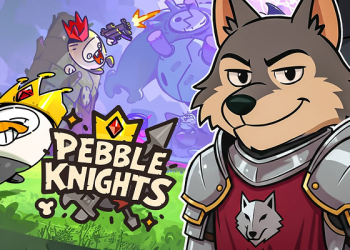


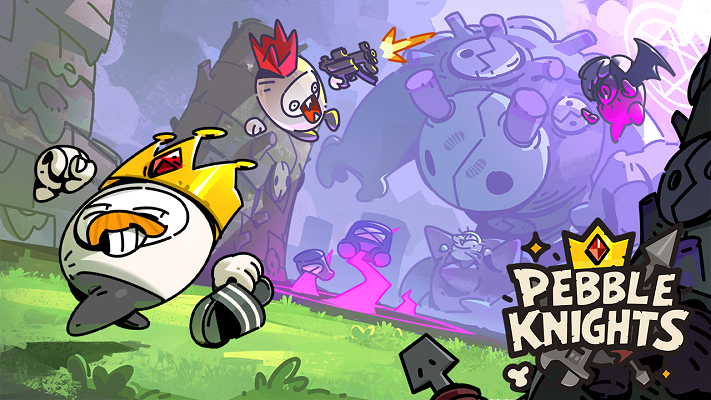
Pebble Knights, a five-player cooperative roguelike survival game from a four-person team, Seoul-based development studio, is showing the world how Korean indie multiplayer roguelike games are no longer following global trends, they’re setting them.
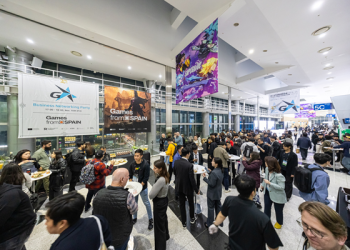
The game crafted by Fifty One Percent made waves at the recently concluded gaming gala G-Star 2025, where the indie showcase hosted 80 developers from 20 countries. The Pebble Knights team has already secured publishing with Phoenix Games for China and launched their Tumblbug campaign at 9 AM on November 17, 2025, offering cooperative survival gameplay exclusively to early backers.
This moment reveals a larger truth about the industry, as it is catching up to a simple yet powerful idea that will change everything we think about roguelike design. For years, roguelikes focused on lone heroes grinding through procedurally generated dungeons.
Pebble Knights is a five-player cooperative roguelike survival game where players work together as tiny stone warriors fighting against a deadly fungal outbreak. Each run blends exploration, resource gathering, and intense real-time combat.
In the game, players grow their characters during the day, then face escalating threats at night. The twist comes from its team-focused permadeath system, where fallen players can be revived only by teammates consuming them, creating a constant push-and-pull between personal progression and group survival.
Pebble Knights throws the age-old blueprint into the trash. Instead of isolated survival, in this game, five players face nightly attacks from the Evil Hell Fungus army together. Koreagamedesk team caught up with Park Min Joon, Team leader, and Choi Jin, Main Director of the game, to explore the shift from solo to squad-based five-player co-op mechanics and to better understand the game.
Why Five Players Changed Everything?
According to the team, the decision to build five-player experiences wasn’t random, and Fifty One Percent’s developers explained exactly why. Through rigorous testing, they discovered that five represented the perfect balance between chaos and coordination.
Too few players? The game becomes predictable. Too many? Communication breaks down. Five-player cooperative survival gameplay creates unpredictability that feels organic rather than artificial, where simultaneous character progression forces players to adapt in real-time rather than follow predetermined strategies.
Traditional roguelikes rely on random encounters to create tension. Multiplayer roguelikes create tension through human interaction, but watching teammates make split-second decisions while monsters overwhelm you forces genuine reactions.
This design philosophy extends into their unique revival system. When a player falls, teammates spend resources to resurrect them immediately. Individual growth and team survival become inseparable. Suddenly, permanent death, the core mechanic that defines roguelikes, becomes less punishing and more collaborative. A teammate’s failure becomes a team problem requiring collective investment.
The Networking Challenge Nobody Talks About
Behind this elegant game design lies a technical nightmare that most indie studios avoid entirely: cooperative survival gameplay at five-player scale requires solving synchronization problems that major publishers with unlimited budgets struggle with.
Fifty One Percent’s team faced constant network desynchronization during simultaneous combat. Steam’s built-in networking tools helped, but didn’t solve the problem. They repeatedly reworked their entire synchronization logic, testing obsessively until gameplay felt responsive.
This challenge explains why Korean indie multiplayer roguelike games remain rare. Networking code grows exponentially more complex with each additional player. Server costs spiral. Testing becomes nightmarish.
Most small studios rationally avoid this headache. Fifty One Percent didn’t. They solved it. That persistence, combined with Korean gaming infrastructure and government support programs like the Gyeonggi Game Audition, enabled what seemed impossible for a four-person team.
From Gyeonggi Audition Success to Global Recognition
“Ranking third in the Gyeonggi Game Audition follow-up support program meant more than prestige. The 15 million won grant became a crucial marketing budget for user acquisition. Suddenly, Pebble Knights could afford international promotional campaigns,” said Park Min Joon.
That funding transformed their trajectory from “promising indie game” to “credible global contender.” Korean government support for game developers runs deeper than most recognize, it’s not charity but strategic investment in cultural exports.
Then came the Phoenix Games publishing deal for China. This partnership changed the game fundamentally. Phoenix Games doesn’t just distribute; they handle localization, navigate China’s complex licensing requirements, and coordinate with local streamers and content creators. Korea is now the third-largest market for Chinese games, yet the reverse happens less frequently.
Pebble Knights broke that pattern. Korean developers partnering with Chinese publishers represents a shift in global gaming power dynamics that extends beyond this single title.
The Tumblbug Moment: Community-First Game Development
On November 17th, 2025, Pebble Knights’ Tumblbug campaign launched with a limited-time exclusive in-game costume, the only cosmetic reward currently available. This exclusivity wasn’t marketing manipulation; it reflects genuine game development priorities.
The current build lacks a complete cosmetics system. Rather than delay the campaign for standard monetization features, Fifty One Percent offered something scarcer: access to development funding while providing genuine value to backers.
Tumblbug crowdfunding campaigns have funded Korean games like Sanabi (which won awards globally) and escape room experiences that exceeded funding goals by thousands of percentage points. Pebble Knights follows this tradition while introducing wrinkles, in-game naming rights, ending credits appearances, and physical merchandise.
“The campaign funds aren’t aimed at massive capital raises but community building. Early players become invested stakeholders, not just customers,” said Choi Jin.
This represents a philosophical shift in game funding. Rather than venture capital or major publishers dictating game design through funding control, direct community investment lets developers maintain creative autonomy while simultaneously proving market viability. A successful Tumblbug campaign validates concepts before expensive late-stage development, reducing financial risk for everyone involved.
G-Star 2025: Where Indies Reshape Industry Conversations
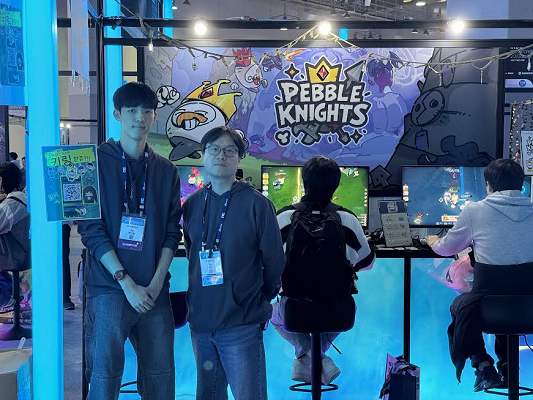
The Indie Showcase 2.0: Galaxy operated 400 booths with developers from 20 countries. Pebble Knights stood among thousands of competitors. Yet on the event’s first day, typically the slowest, the booth added over 300 Steam wishlists.
The team appeared on G-Star TV’s official broadcast, reaching audiences far beyond physical booth visitors. Creators who played the game expressed a strong interest in collaboration opportunities.
This demonstrates a crucial aspect of the G-Star 2025 showcase as an institution. It’s where Korean indie developers prove themselves to international audiences and where international developers discover that Korea isn’t just a source of major AAA franchises but an epicenter of innovative small-team game design.
Korean indie successes like Skul: The Hero Slayer and SANABI preceded Pebble Knights, but each breakthrough establishes legitimacy for the next wave.
Reshaping What Roguelikes Can Be
Roguelikes thrived by eliminating narrative complexity, and endless procedurally generated runs meant players didn’t need story context. Korean indie multiplayer roguelike games break that assumption. Pebble Knights layers narrative into cooperative mechanics. The Evil Hell Fungus provides continuous enemy variety.
Night attacks create rhythmic pacing. Day phases for resource gathering give breathing room for social interaction. These aren’t revolutionary individually; together they transform roguelike structure from “run until you die” loops into something resembling campaign progression across multiple nights.
This matters because it expands roguelike appeal beyond hardcore audiences. Casual players enjoy structure. Roguelike veterans appreciate emergent complexity. Cooperative mechanics attract people who skip single-player experiences. By combining all three, Pebble Knights targets demographics that traditional roguelikes miss entirely.
Global Gaming Power Shifts
Five years ago, suggesting a four-person Korean indie studio would publish globally through Chinese partnerships while launching crowdfunding campaigns on platforms that didn’t exist in Korea a decade earlier would have seemed absurd, says Choi Jin.
Today, it feels inevitable. Korean indie developers possess technical skills, access to government support infrastructure, proximity to both the Chinese and Japanese markets, and a cultural gaming heritage that values innovative design regardless of production budget, he added.
Korean indie multiplayer roguelike games succeed internationally because they solve problems global audiences face with existing roguelikes. Permanent death feels less cruel when teammates can resurrect you. Grinding feels less tedious when five people experience it simultaneously. Roguelike randomness feels less frustrating when cooperation smooths out unfair variance.
Pebble Knights doesn’t reinvent gaming. It optimizes existing concepts through disciplined design thinking applied to five-player co-op mechanics. That optimization matters. That discipline compounds. That’s how indie studios reshape industries.
Why This Moment Matters for Gaming’s Future
Pebble Knights launches into a market saturated with roguelike releases. Success requires more than solid mechanics. It demands cultural relevance and strategic positioning. The game achieves both through Korean indie development infrastructure, Phoenix Games’ Asian market access, Tumblbug community investment, and G-Star’s international platform. No single element guarantees success; combined, they create a multiplier effect.
This model will replicate. Other Korean indie studios will pitch five-player concepts to Phoenix Games. Other developers will launch Tumblbug campaigns. Different teams will aim for G-Star recognition. The question isn’t whether Pebble Knights succeeds individually; it’s whether this success establishes a template that elevates the entire Korean indie ecosystem.
Korean indie multiplayer roguelike games represent gaming’s near future, small teams combining technical sophistication with innovative design, supported by government infrastructure, published through strategic partnerships, funded by engaged communities, and validated through international showcases. Pebble Knights didn’t invent this model. But they proved it works at scale. That proof changes everything.
Get the hottest news on upcoming game releases, patch updates, and gaming industry trends, stay updated with KoreaGameDesk on Twitter, Facebook, Instagram and Linkedin
More from us:
- Assassin’s Creed Mirage: A Nod to the Past, Embracing the Future
- Unleash your inner hero with Alterium Shift on Steam’s early access
- Shadowlands Release Date: Everything We Know So Far
- Ubisoft delays Avatar: Frontiers of Pandora, cancels four other games
- Rocket League Sideswipe: Release date, APK download, system requirements