


UV unwrapping software company Rizom Lab, owner and developer Remi Arquier, believes that AI automation cannot replace human game developers in texture-mapping workflows, particularly in procedural generation pipelines, as artists will maintain critical control through at least 2030.
Despite GPU-accelerated tools now packing over 500,000 islands in under 60 seconds, the technology still requires human expertise to understand artistic intent, a bottleneck that machine learning has yet to solve.
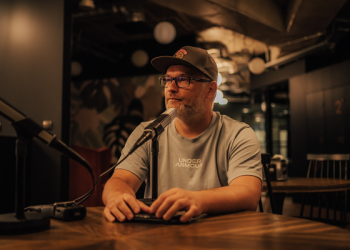
In an exclusive interview with KoreaGameDesk, Remi Arquier, founder and lead developer of Rizom-Lab, explains why AI automation cannot replace game developers in UV unwrapping workflows for at least the next 5 years.
Arquier pioneered commercial texture-mapping technology with Unfold3D in 2003, before launching RizomUV in 2016, spending over two decades solving challenges at the intersection of mathematics, geometry, and artistic intent. His software now powers umpteen AAA game development pipelines worldwide, handling procedural generation environments in Houdini and character texturing in Substance Painter.
Despite advances in GPU acceleration, RizomUV 2025 packs over 500,000 UV islands in under 60 seconds. Remi Arquier argues that the fundamental bottleneck remains understanding what artists actually want. That cognitive gap cannot be bridged solely by machine learning.
The Persistent Challenge of Artistic Intent
When asked about the biggest UV unwrapping bottleneck that technology hasn’t solved yet, Remi Arquier doesn’t hesitate.
“The biggest challenge is understanding artistic intent,” he explains. “Tools still struggle to understand why an artist wants a specific seam, distortion level, or layout choice. Without this context, automation can only go so far. This remains more of a workflow and communication problem than a pure technical one.”
This limitation becomes particularly evident in production environments where consistency and predictability matter more than experimental flexibility. Furthermore, game developers working on procedurally generated assets need deterministic systems that produce reliable results across thousands of asset variations. AI’s probabilistic nature fundamentally conflicts with these requirements.
Arquier’s background uniquely positions him to understand this tension. Consequently, after founding Unfold3D in 2003, he became one of the first developers to demonstrate automatic mesh flattening with distortion prevention. Yet even with more than 20 years of algorithmic refinement, he emphasizes that full automation remains elusive.
AI’s Limited Role in Modern Workflows
Addressing the current state of AI and machine learning in texture mapping, Arquier provides a measured assessment that contrasts sharply with industry hype around automation.
“AI and machine learning are starting to assist UV workflows, but these approaches are mostly explored in research labs and experimental tools, and are not yet widely commercialized,” he explains. “They are used on limited parts of the process, while core unwrapping algorithms remain largely unchanged.”
The distinction matters for game developers evaluating their technology stacks. Meanwhile, AI can provide useful signals, semantic understanding of mesh regions, extraction of structural information via graph-based neural networks, or suggestions for seam placement. Still, these capabilities operate only on specific sub-steps.
“In practice, AI is useful in several ways,” Arquier says. “One important area is the semantic understanding of meshes, such as identifying parts or functional regions. Beyond that, non-LLM approaches like graph-based neural networks, which are well-suited to mesh processing, can help extract structural information or guide certain decisions.”
However, he emphasizes a crucial caveat. “These techniques still operate on specific sub-steps of the workflow. The majority of UV unwrapping remains based on robust, deterministic geometry algorithms. We see the future as hybrid: AI contributes localized guidance or data, while traditional solvers ensure reliability, control, and predictable results,” he added.
This hybrid approach reflects the reality of modern AAA production pipelines, where RizomUV integrates with Substance Painter, Marmoset, and game engines to form seamless workflows. In these environments, artists need consistency across hundreds or thousands of assets, making experimental AI outputs problematic for production schedules.
Speed Without Sacrificing Control
RizomUV 2025’s GPU-accelerated packing system represents a significant technical achievement, but Arquier frames it carefully within the context of artist empowerment rather than artist replacement.
”GPU acceleration is already part of modern UV workflows,” he explains. “RizomUV, along with a few other tools, already uses the GPU for UV algorithms, including packing, but not limited to it. This has proven to be a major advantage for handling complex assets and large numbers of islands.”
The 2025 release completely rebuilt the packing system from the ground up, achieving average tile coverage improvements of 2-4 percent while dramatically reducing processing time. In large-scale game development, particularly for open-world titles or live-service games, these speed improvements directly affect production velocity.
Nevertheless, Arquier acknowledges that significant technical hurdles remain. “Looking ahead, GPU usage will continue to expand. However, parallelizing UV algorithms efficiently on the GPU remains a significant challenge. Many UV problems involve global decisions, ordering, and constraints that do not map easily to massively parallel architectures. Progress will continue, but it requires careful algorithm design rather than brute-force parallelism,” he said.
The latest version introduces four distinct packing strategies, Efficient, Padding Perfect, Pixel Aligned, and Pixel Art, giving artists precise control over optimization priorities. Specifically, this design philosophy reflects Arquier’s core belief that tools should amplify artists’ capabilities rather than override artists’ decisions.
Real-Time Optimization and Next-Gen Game Engines
When discussing the role of real-time texture mapping optimization in next-generation game engines like Unreal Engine 5, Arquier distinguishes between preview capabilities and production-quality workflows.
“Real-time UV optimization will mainly help with faster iteration and visualization inside game engines,” he explains. “Engines want to dynamically adjust texel density or streaming priorities, especially with virtual texturing. That said, studios still rely on stable, offline-quality UVs for baking and production. Real-time systems will support and complement authored UVs, not replace them.”
This perspective addresses common misconceptions about emerging technologies, such as Unreal Engine’s Nanite virtualized geometry system. While Nanite reduces traditional polygon constraints and enables unprecedented geometric detail, it doesn’t eliminate the need for UV unwrapping; it transforms it.
“Technologies such as Nanite reduce traditional polygon constraints, but they do not remove the need for UVs,” Arquier clarifies. “Instead, they shift the focus toward streaming behavior, texture residency, and cache efficiency. UVs remain important, but for different technical reasons than in the past.”
For game developers working with these next-generation technologies, the implication is clear: UV unwrapping skills remain essential, but optimization priorities shift toward memory bandwidth, streaming performance, and cache coherency.
Procedural Generation and Pipeline Integration
Arquier’s emphasis on deterministic, rule-based systems becomes particularly relevant when discussing procedural asset generation, an increasingly critical workflow for open-world games.
“Procedural assets require UV systems that work without manual intervention,” he added. “You cannot rely on hand-placed seams or predictable topology. In practice, RizomUV’s algorithms are already used in procedural workflows, notably through the Houdini to RizomUV bridge, but also via our C++ SDK, which is integrated into studio pipelines.”
The Houdini bridge, developed in collaboration with SideFX Labs, provides four specialized nodes that facilitate bidirectional communication between Houdini’s procedural environment and RizomUV’s unwrapping algorithms. Additionally, this integration enables technical artists to build complex procedural generation systems in which UV generation occurs automatically as part of the asset creation pipeline.
“These workflows rely on rule-based, deterministic UV processing that produces consistent results across asset variations,” Arquier emphasizes. “This level of predictability is essential for procedural generation, where scalability and reproducibility matter more than per-asset manual adjustments.”
Yet even in highly automated procedural workflows, complete AI automation remains problematic. The systems still require carefully designed rules and constraints that encode artistic intent. The automation doesn’t replace artistic decision-making—it scales and replicates decisions that artists have already made.
Texture Compression and Platform-Specific Optimization
Modern texture compression formats introduce additional constraints that UV unwrapping tools must address. Arquier’s team has begun tackling these requirements in RizomUV 2025, though he characterizes the current implementation as foundational.
“Modern texture compression formats work on fixed-size blocks, which means UV layout has a direct impact on final visual quality,” he explains. “In our latest packing version, we introduced an initial step toward addressing these constraints by allowing islands to be adjusted to the pixel grid.”
This pixel-aligned packing mode helps mitigate filtering artifacts and wasted compression blocks—particularly important for mobile game development where memory bandwidth is severely constrained. However, Arquier sets realistic expectations about the current state of this feature.
“This is not yet a full solution aligned with compression block requirements, but it is a meaningful step in that direction,” he clarifies. “Compression-aware packing is a gradual process, and this represents an important foundation rather than a finished solution.”
Mobile and VR: Divergent Constraint Sets
Platform-specific optimization becomes even more critical when considering mobile and VR game development, which impose fundamentally different technical constraints.
“Mobile and VR impose strong but different constraints,” Arquier said. “Mobile focuses on memory and bandwidth efficiency, while VR prioritizes visual stability and low distortion. UV workflows will increasingly favor fewer seams, fewer tiny islands, and more predictable sampling, even if that slightly reduces packing efficiency.”
This represents a shift in optimization priorities that challenges conventional wisdom about texture mapping. Traditional workflows emphasize maximizing texture space utilization, but mobile platforms with constrained memory bandwidth benefit more from simpler UV layouts that compress efficiently.
AI automation struggles with these contextual trade-offs because they depend on deployment targets, art direction preferences, and technical constraints that aren’t inherent to the 3D geometry itself. Consequently, an artist working on a mobile VR title needs to make different decisions than one creating assets for a high-end PC game.
The Future is Semi-Automatic Tools and Constraint-Driven Optimization
Looking toward the future of UV unwrapping technology, Arquier envisions a hybrid approach that combines automation with artist control through sophisticated constraint systems.
When asked whether UV unwrapping will become completely automated, he responds carefully: “In the medium term, full automation is unlikely to replace artist control. Artists need predictable tools that respect their intent and allow intervention when needed. Automation works best when it removes repetitive tasks while remaining transparent and controllable.”
The technology Arquier’s team is currently developing reflects this philosophy through constraint-driven optimization and semi-automatic tools.
“We are focusing on constraint-driven UV optimization, but also on semi-automatic tools that give artists more leverage without removing control,” he explains. “Instead of constant trial-and-error tweaking, artists define clear constraints such as texel density limits, seam budgets, or distortion thresholds, and the system solves within those boundaries.”
This approach transforms the artist’s role from manual execution to high-level direction. Rather than spending hours manually adjusting individual UV islands, artists specify their requirements and let the solver find optimal solutions within those constraints.
”Semi-automatic tools play an important role here, allowing artists to guide, adjust, and validate results at key steps, while automation handles repetitive or complex tasks,” Remi Arquier said. “This approach keeps workflows efficient while preserving artistic intent.”
The Enduring Value of Human Expertise
Throughout the interview, Arquier’s core message remains consistent: AI automation will enhance UV unwrapping workflows, but it cannot replace human artistic judgment and technical expertise.
“The biggest challenge is understanding artistic intent,” he emphasizes. “Tools still struggle to understand why an artist wants a specific seam, distortion level, or layout choice. Without this context, automation can only go so far.”
This cognitive gap, between what algorithms can compute and what artists intend, represents a fundamental limitation that persists regardless of processing power or machine learning sophistication. Therefore, UV unwrapping sits at the intersection of mathematics, aesthetics, and technical constraints, requiring human judgment to balance competing priorities.
For the next five years and likely beyond, game developers who master UV unwrapping workflows while embracing new constraint-driven and semi-automatic tools will find themselves increasingly valuable in texture mapping pipelines. The technology amplifies their capabilities without diminishing their importance.
As Remi Arquier concludes, “Automation works best when it removes repetitive tasks while remaining transparent and controllable.” That philosophy, empowering artists rather than replacing them, defines the future of UV unwrapping technology for game developers worldwide.
Get the hottest news on upcoming game releases, patch updates, and gaming industry trends, stay updated with KoreaGameDesk on Twitter, Facebook, Instagram and Linkedin
More from us:
- All About League of Legends New Champion, K’Sante: Teaser, Gameplay, and Release Date
- Nexon game’s Veiled Experts opens up final beta test signups with a new trailer
- South Korean eSports Team Bags Gold in Asian Games, Captures Global Attention
- VR game developer Pixelity Games to launch battlefield adventure ‘The Patcher’
- Amazon will publish the next series of the Tomb Raider Game