

In a gaming industry flooded with thousands of releases each year, most indie game developers face an unfortunate reality: even brilliant games can disappear into digital obscurity, but Jiayao Wu, the developer behind “Scam Centre Simulator: Under Kingdom,” believes that Indie developers must marry a sharp idea with tight technology to survive an overcrowded market.
According to Jiayao Wu, a solo developer, and founder of Jiao Games, combining a unique theme, authentic storytelling, community engagement, and the strategic use of streaming platforms is a masterclass in how budding game developers can not only survive but actually thrive in an increasingly saturated gaming landscape.
The indie game market is booming like never before. In 2025, indie games accounted for 48 percent of all revenue on Steam, up from 31 percent in 2023. The market itself is valued at $4.85 billion and will reach $9.55 billion by 2030.
However, behind these exciting numbers lies a brutal truth. Success in indie gaming is becoming a winner-takes-all game. According to recent market analysis, fewer than 0.5 percent of indie games account for 80 percent of all revenue. This means that, for most indie developers, especially solo creators, standing out has become harder than ever.
Yet the creator of “Scam Centre Simulator: Under Kingdom” has found a way to break through the noise. His approach reveals five critical strategies that any budding game developer should understand to navigate this challenging landscape.
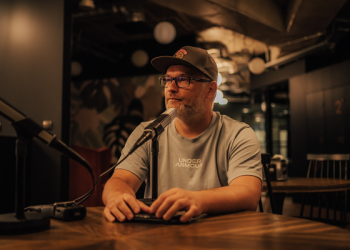
So, KoreaGameDesk caught up with Jiayao Wu to discuss the game’s origins, the hard choices of solo development and what other small studios can learn about standing out.
Scam Centre Simulator: Under Kingdom — Game Overview
Scam Centre Simulator: Under Kingdom is a darkly humorous management simulation game developed by solo Malaysian indie developer Jiao Games. The game draws inspiration from real-life scam operations in Southeast Asia and places players in the role of a desperate fugitive fleeing gambling debts.
Players begin their journey under the guidance of a mysterious figure who helps them gradually build their own criminal scamming empire. The game requires players to manage multiple criminal operations through several key mechanics:
Players must kidnap and recruit workers, then tame and control them to maintain their criminal workforce. The game also involves spreading scam advertisements to lure new victims into the operation.
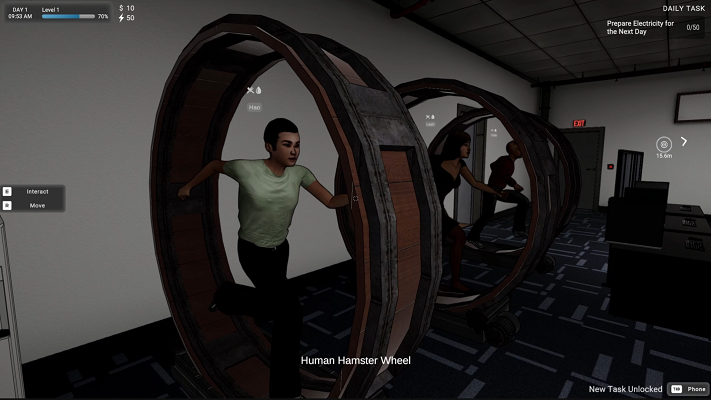
With electricity in short supply, players generate power through unconventional means including hand-crank generators, bicycle-powered generators, and human hamster wheels—essentially converting forced human labor into electrical energy.
Players forge deals with corrupt influential figures, including politicians and police officers, earning their respect and carrying out the city’s darkest tasks to expand their criminal network.
The game allows players to upgrade facilities, customize their hideout, and continuously expand their scamming operation while managing increasing complexity.
Story events trigger as players pay off their initial gambling debt, with these events shaping the player’s ultimate fate and providing narrative progression throughout the game.
The game released a demo on Steam in late October 2025, with an early access launch scheduled for Q1 2026 exclusively on PC through the Steam platform. Pricing details remain to be announced.
Finding a Unique Theme Before You Build Your Audience
The most important lesson from his journey is deceptively simple. It is to create something no one else has made before. While thousands of tycoon and management games exist on Steam, almost no one had explored scams as a gameplay topic until this developer decided to tackle it.
That singular choice—turning a serious real-world problem into darkly humorous strategic gameplay—instantly differentiated the game in a crowded market.
“Unlike most simulator or tycoon games that focus purely on efficiency and profit, Scam Centre Simulator mixes management gameplay with satire and storytelling,” said Jiayao Wu.
“It’s not just about building a business, it’s about running a strange underground society.” This approach works because it solves a fundamental problem facing indie developers: how do you get noticed when your game is just one of thousands released each month?
The current state of market saturation cannot be overstated. In 2015, only 1,951 indie games were released on Steam annually. By 2024, that number had jumped to 8,554—a nearly 440 percent increase in less than a decade.
The challenge for indie game developers is that more games also means more competition for player attention, media coverage, and streaming exposure. Unique themes matter because they give streamers and media outlets a reason to talk about your game rather than focusing on AAA releases or other indie titles that follow familiar formulas.
Jiayao Wu understood this well. Coming from Malaysia with over 10 years of experience living in Southeast Asia, he saw an opportunity to highlight real-world scam operations in a way that Western audiences rarely encounter.
That personal background—combined with a completely original game concept—gave him a natural story to tell. For budding developers, the lesson is clear. Tap into your unique experiences, perspectives, or observations of the world. That authenticity becomes your marketing advantage.
Build Community Early, Before Launch Day
One critical mistake many indie game developers make is waiting until their game is finished to start building an audience. Wu took the opposite approach. He invested heavily in community building, playtesting, and gathering feedback years before the official release. When the demo eventually launched, he already had an engaged group of players ready to experience it.
“Player feedback from the demo has been invaluable in shaping the full release,” he noted. “Through playtesting, I learned which systems players enjoyed most, which mechanics were confusing, and how the pacing affected engagement.”
This approach aligns with one of the most critical discoveries in indie game marketing research: word-of-mouth and direct player engagement remain the single largest driver of game discovery.
According to recent surveys of actual player behavior, 92 percent of consumers trust recommendations from friends and family, and 49 percent of players rely on word of mouth when finding new games. Community building creates this word-of-mouth effect before launch rather than hoping it happens afterward.
Competent developers begin marketing efforts 6 to 12 months before release, gradually revealing game elements while building an audience through social media, Discord servers, Reddit communities, and streaming platforms.
This period of gradual audience building serves multiple purposes, as it generates genuine enthusiasm from people who have tested the game firsthand, it creates data about what players actually want (rather than what developers assume), and it builds social proof that makes mainstream media and streamers more interested in covering the game.
For solo developers on a shoestring budget, this is critical. You cannot afford to spend tens of thousands of dollars on advertising like AAA studios do. What you can do is build a smaller but highly engaged community of players who will advocate for your game on their own social networks. That organic advocacy is worth more to other core gamers than any paid advertisement.
Master the Art of Streamer-Friendly Design
One of the biggest shifts in indie game marketing over the past three years has been the rise of streaming as the primary discovery mechanism. Today, streamers and content creators function as influential tastemakers whose coverage can transform an unknown indie title into a viral hit. The developer of “Scam Centre Simulator” understood this instinctively.
“Lately, many games are designed to be ‘streamer bait,’ attracting popular streamers to play and share them,” Wu said.
“This isn’t cynical game design—it’s strategic thinking. A game that generates interesting moments, unexpected humor, or shocking twists is more likely to be shared by streamers with their audiences. Games like “Among Us” gained massive popularity years after launch when streamers like Sodapoppin started showcasing them to their audiences,” added Jiayao Wu.
The metrics supporting this approach are striking. Analysis of player discovery channels shows that video content creators and streamers significantly influence player decisions.
In fact, indie games accounted for 10.3 percent of hours watched among the Top 500 titles on streaming platforms in the first quarter of 2025, up from just 5 percent six years earlier. That’s a doubling of streaming visibility for indie titles in just six years.
For “Scam Centre Simulator,” the strategy is clear. The game has visual appeal, dark humor, and unpredictable moments that streamers can react to. Every recruiting sequence, every electricity crisis, every system the player must manage creates potential for entertaining moments that can be shared on Twitch or YouTube.
Budding developers should ask themselves. Does my game create naturally shareable moments? Are there situations a streamer will want to show their audience? If the answer is no, consider adding mechanics, visual effects, or narrative beats that generate these moments.
The practical approach is straightforward. Rather than waiting for streamers to discover your game by accident, identify 20 to 50 content creators whose audiences align with your game’s theme. Offer them free copies or early access. Personalized outreach acknowledging familiarity with their content dramatically increases response rates compared to generic messages. Partner with streamers early, not just at launch.
Solve the Discoverability Crisis Through Authentic Marketing
Discoverability—the ease with which potential players can find your game—remains the silent killer of indie games. Every month, hundreds of games launch on Steam with virtually no visibility. Players cannot buy games they don’t know exist, and algorithms cannot promote games without sales momentum.
The developer of “Scam Centre Simulator” tackled this problem through a combination of approaches.
First, he recognized that marketing starts with the store page itself. Steam’s discovery algorithm favors games with good visual presentation, clear descriptions, and relevant tags. A well-crafted store page—with compelling capsule art, a strong headline, and clear communication of what makes your game different—directly impacts how many people discover you through platform algorithms.
Second, he focused on media outreach and review coverage. With no AAA publisher backing him, he couldn’t buy expensive ad campaigns. Instead, he cultivated relationships with gaming journalists and media outlets who were interested in the game’s unique premise. Scams as a game topic naturally attracted attention from tech journalists, gaming publications, and news outlets interested in stories about online fraud.
Third, he recognized the importance of visibility in gaming events and festivals. Steam hosts seasonal festivals where indie games get featured. PlayStation, Xbox, and Nintendo all have dedicated indie programs that highlight smaller studios. Participating in these events puts your game directly in front of potential players who are specifically looking for indie titles. It’s free or low-cost visibility that can generate significant momentum.
Finally, the developer understood the long-term nature of indie game success. He wasn’t aiming for a massive launch spike—he was building for sustained visibility. Updates, new features, and ongoing community engagement keep players interested and give gaming media reasons to cover the game months after launch.
“No Man’s Sky” famously rebuilt its reputation through years of free updates after a disappointing launch. While that’s an extreme example, the principle holds. Post-launch support and community engagement often matter more than launch day numbers.
Embrace the Solo Developer’s Unique Advantages
Perhaps the most important lesson from this developer is recognizing what solo developers do better than large studios: focus on creativity and niche appeal. AAA studios are often trapped by corporate structures, focus groups, and pressure to appeal to mass audiences. Independent developers are free to take risks that mainstream studios won’t touch.
Jiayao Wu repeatedly emphasized that being indie—working alone—gave him complete creative control. He could make controversial design choices without checking with a marketing committee.
He could explore a serious real-world topic through dark humor without corporate lawyers getting nervous. He could experiment with gameplay systems like electricity shortages and human-powered generators that studio executives would immediately reject as “too weird.”
This is your superpower as a budding indie developer. You can create something that large studios literally cannot create—not because they lack the talent, but because they lack the freedom to take those creative risks.
However, this freedom comes with a tradeoff. Solo developers cannot compete with AAA studios on budget, team size, or marketing reach. Instead, they must compete on originality, community engagement, and authentic storytelling.
Wu understood this and chose accordingly. He invested in tools and education rather than flashy graphics. He built a community rather than buying ads. He created niche appeal rather than chasing mainstream audiences.
What the Numbers Tell Us About Indie Success in 2025
To put this all in perspective, recent data about the indie game market reveals some significant trends. Indie PC revenues have grown at a compound annual rate of 22 percent between 2018 and 2024, compared to just 8 percent for AA and AAA games. This means indie games are not just surviving—they’re thriving in terms of revenue growth.
At the same time, market concentration is extreme. Only about 8 percent of the top 100 indie games accounted for 80 percent of total revenue. The rest of the market is competitive but not impossible to enter. Success requires standing out, but standing out is achievable through smart strategy rather than large budgets.
Specific genres have proven more successful for indie developers on streaming platforms. Co-op games, horror, and survival games consistently perform well because they generate entertaining content for streamers.
Games like “Lethal Company,” “Valheim,” and “Phasmophobia” found massive audiences partly because they were naturally “streamer-friendly.” Management and simulation games—like “Supermarket Simulator” and “Crime Scene Cleaner”—also perform well because they offer engaging organizational gameplay loops.
Mobile gaming, particularly in the Asia-Pacific, is the fastest-growing area for indie developers. The region already houses 1.5 billion active mobile gamers, and barriers to entry are lower than ever. However, PC gaming through Steam remains the primary focus for English-language indie developers.
Lessons for Budding Developers
For the next generation of indie game creators, the message from this developer and current market trends is clear:
Make something genuinely different. The gaming market rewards creativity over polish. “Scam Centre Simulator” succeeded not because of its graphics—it deliberately uses low-poly models for performance optimization—but because it tackles a topic no one else has explored in gaming. Ask yourself: what unique perspective, experience, or idea do I bring to gaming that no one else has?
Build community before launch. Start your marketing efforts 6 to 12 months before release. Use social media, Discord, Reddit, and playtesting to build an engaged group of early supporters who will authentically advocate for your game.
Design for streaming and sharing. Create moments that are inherently interesting or entertaining. Design your game with the understanding that streamers will play it and share moments with their audiences. That organic sharing is how most indie games gain visibility today.
Optimize for discoverability systematically. Invest time in your store page, media outreach, event participation, and review cultivation. None of these is free, but they cost time rather than money. For solo developers, this is precisely where your effort should go.
For budding game developers reading this, the lesson is simple but challenging. You cannot out-budget the competition, but you can out-create them. You cannot out-market the competition, but you can out-connect with audiences. And you cannot compete on scale, but you can compete on authenticity, creativity, and genuine innovation.
That’s the path forward for indie games in 2025 and beyond.
Get the hottest news on upcoming game releases, patch updates, and gaming industry trends, stay updated with KoreaGameDesk on Twitter, Facebook, Instagram and Linkedin
More from us:
- Unleash your inner hero with Alterium Shift on Steam’s early access
- Hackers Target Call of Duty Gamers with Malware: Activision Investigates and Unveils Clever Tactics
- WeMade partners with Nine66 to boost the Saudi Arabian gaming industry
- Netmarble Witnessed A 7% Revenue Growth For The First Quarter Of 2021
- BLENS Wows Gamescom 2023 with Innovative Cross-Platform VR Game, OctoRaid