

Roblox is rewriting the future of gaming by expanding its global IP universe through Roblox Commerce APIs, a licensing program powered by Shopify integration, and a thriving creator economy. Entertainment franchises now grow inside games as immersive, monetizable, and social worlds that connect everyone from Gen Z to grandparents.
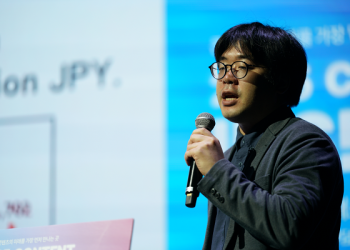
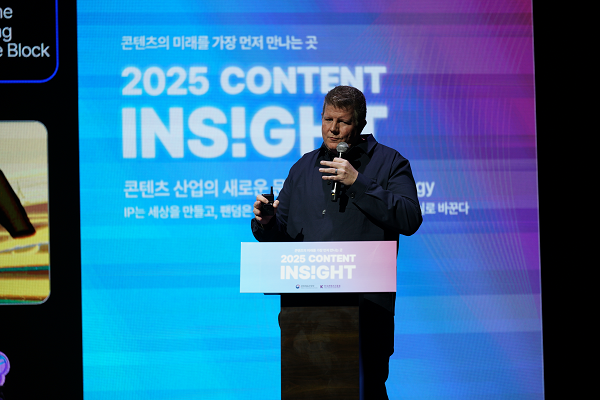
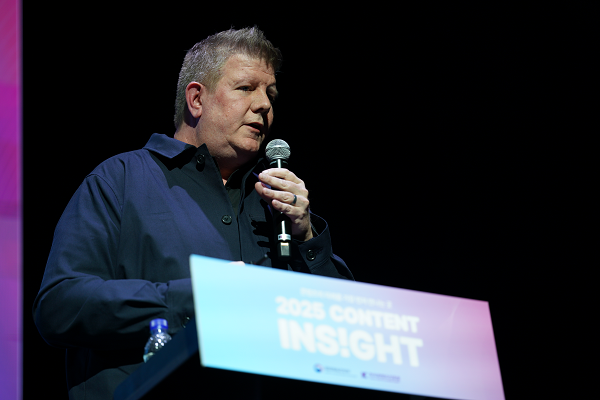
At KOCCA Content Insight 2025, Christian Bayley, Global Head of Licensing & Consumer Products at Roblox, spoke about the future in which fan passion meets platform technology, and how balancing community creativity with official Intellectual Property (IP) partnerships could shape the next era of global entertainment.
He highlighted how Roblox Commerce APIs, a Shopify-powered licensing program, and the creator economy are helping brands move beyond games into new spaces like music, fashion, retail, and culture, turning Roblox into a platform where digital creativity and real-world business now merge.
Picture a Saturday morning when kids worldwide boot up a farming simulator, unaware they’re about to witness history. Within hours, Steal a Brainrot shatters the global concurrent player record, reaching 25.4 million players simultaneously. More than Fortnite’s all-time peak, more than Steam’s entire user base at any given moment, beat that!
In another instance, The Block, Roblox’s curated music venue, six million fans flood a one-day K-Pop Demon Hunters singalong. It is the total attendance of Taylor Swift’s record-breaking Eras tour, which took two years and 150 stops to achieve.
This isn’t a marketing stunt or a one-off viral moment. Instead, Roblox has systematically transformed how entertainment franchises are born, grown, and monetized, turning its platform into what Christian Bayley calls “Internet 3.0”, where gaming, commerce, music, and social life collapse into a single daily habit.
During the event, he said that Roblox now commands 150 million daily active users who spend nearly three hours a day on the platform—more than double YouTube’s engagement—and has a 50-50 gender split unmatched by any gaming competitor at scale.
As Roblox’s global IP universe, Roblox Commerce APIs, Roblox licensing program, Shopify integration, creator economy, and the future of gaming converge into a single flywheel, playable worlds generate real-world revenue, cultural relevance, and franchise staying power.
The 150-Million-User Shift: From Game Platform to Cultural Engine
Speaking at the 2025 edition of Content Insight (Content INS!GHT), hosted by the Korea Creative Content Agency (KOCCA) and the Ministry of Culture, Sports and Tourism (MCST) from November 6–7 at the Hongneung Content Culture Plaza in Seoul, Christian gave the audience an inside look at how Roblox’s expanding IP universe is transforming the world of entertainment.
“We now have well over 500 million monthly active users, and what I like to point out with this number, to keep it in perspective, there are only a few games that even come close to these numbers, maybe a League of Legends, an Honor of Kings, a Fortnite. The difference is we’re the only game platform that is 50-50, boys and girls. All the other games of this scale skew very heavily male.”
Roblox posted a 70 percent year-over-year surge, driven by viral simulator games and replayable mechanics. Moreover, 62 percent of US youth log in daily, and 60 percent of the platform’s global user base is now over 13, with the average age rising to 17-25.
This isn’t just demographic drift, as existing players are aging up without leaving, creating a rare “stickiness” in which childhood fans become spending adults within the same ecosystem.
Furthermore, Roblox generates 1.2 billion daily social views of user-created content across YouTube, TikTok, and Instagram, creating a feedback loop where off-platform virality drives in-game traffic and vice versa. Additionally, the platform recently passed the one-trillion-hour mark for YouTube content, a milestone achieved faster than almost any entertainment brand.
When Games Within a Game Outpace Entire Platforms
In October 2025, Steal a Brainrot became the first game ever to surpass 25 million concurrent users. Similarly, Grow a Garden previously held the Roblox record at 21.6 million, and both titles regularly maintain 1 million concurrent users during off-peak hours.
These aren’t anomalies; Roblox itself peaked at 47.4 million concurrent users in August 2025, driven by an “Admin War” event in which top developers staged a playful rivalry.
To put this in context, Christian, that one Roblox experience, just two months old, exceeded Fortnite’s entire player base at its peak. Notably, these games leverage idle mechanics and social play loops, keeping players logged in to generate in-game currency and share moments with friends.
Commerce Gets Real at Roblox
In May 2025, Roblox launched Commerce APIs with Shopify integration, allowing eligible creators and brands to sell physical goods directly inside experiences. Currently available to US users aged 13 and up with credit cards, the system lets players browse, purchase, and bundle physical items with avatar rewards, collapsing discovery, trial, and checkout into one session.
“You can now buy real-world goods and services, so we have commerce APIs that we launched. If you have a Shopify-powered back end or an Amazon storefront, you can pull in your ASINs and your physical products right inside the platform and sell them. It’s a different flow,” said Christian
Meanwhile, the Approved Merchandiser Program ties retail purchases to digital unlocks to buy a Teenage Mutant Ninja Turtles playset in-store, redeem a code on Roblox, and unlock hidden levels, trailers, and exclusive enemies.
High-value transactions prove the audience includes serious spenders, not just allowance-driven kids. Adidas partnered with a top creator to sell a one-of-one avatar necklace paired with custom physical sneakers for $20,000.
At the same time, Lamborghini auctioned a $100,000 package that included a trip to Italy. Christian emphasized that 65 percent of players in Walmart’s Roblox experience are over 18 with disposable income, actively building brand affinity rather than just browsing.
Licensing at the Speed of Fandom: 500 Proposals in Two Weeks
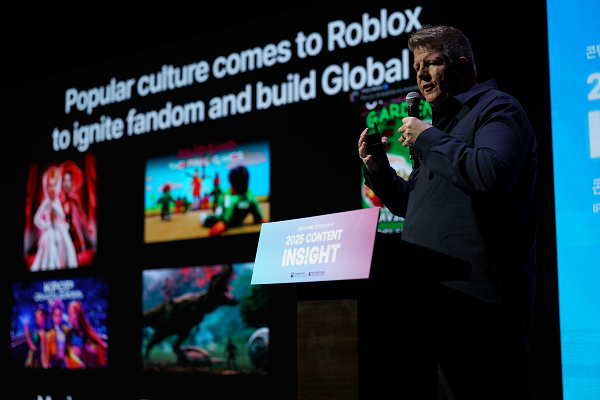
Roblox launched License Manager in July 2025 with Netflix, Kodansha, Lionsgate, and Sega as inaugural partners, and this week opened the program to all rights holders. The platform functions as an RFP matchmaking service as IP owners upload assets, style guides, and business terms, then receive proposals from millions of Roblox Studio-savvy fans who already love the property.
Christian said, “In two weeks, open beta with Netflix, with three Netflix IPs, we received 400, 500 developer proposals back within a week or two to build immersive worlds, and then it becomes turnkey, more like a licensing model with creative approval oversight rather than having to build it yourself.”
This speed matters in meme-driven culture. When Squid Game premiered, there were no official extensions. Within two days, a fan-built Roblox experience launched, giving 100 million global fans a place to “play” the show while Netflix scrambled to catch up.
Christian’s advice to IP holders is that “Don’t shoot the racehorse”—instead, saddle up alongside community-built hits and formalize partnerships that amplify fandom rather than reset it.
The Block, Roblox’s curated concert venue, staged a one-day K-pop Demon Hunters singalong that drew nearly six million attendees, comparable to the whole Eras tour audience Taylor Swift accumulated over two years.
The event didn’t just stream music; it launched the franchise’s first official merchandise, sold directly in-experience, bypassing the eight-month retail lead time traditional licensors face. Players unlocked custom emotes, danced with friends, and purchased avatar items, while community trackers documented weekly UGC drops that sustained engagement long after the premiere.
Similarly, Lady Gaga appeared in Dress to Impress, launching an entire fashion line that players could buy, mix, and wear, while the game’s traffic spiked across social platforms.
Christian explained that artists from Elton John to emerging stars now book Block time to expose their music to an audience that values digital expression as much as physical identity. Hence, Roblox global IP universe, Roblox Commerce APIs, Roblox licensing program, Shopify integration, creator economy, and future of gaming deliver cultural moments with built-in monetization.
Hub-and-Spoke: How Hello Kitty and Kuromi Became Retail Events
Sanrio’s My Hello Kitty Cafe exemplifies the “hub-and-spoke” strategy: build a persistent core experience where fans gather, then spin out character-specific worlds that sync with retail campaigns.
In October 2025, Roblox and Hot Topic launched Kuromi’s Mischief Mansion to celebrate the character’s 20th birthday, pairing a 20-item capsule collection with in-game rewards unlocked via purchase codes. Hot Topic dressed storefront windows with Kuromi-themed displays, and Polygon covered the activation as a fresh model for IP-to-retail integration.
Players who bought physical merchandise received exclusive avatar outfits, creating a loop in which in-store browsing, digital play, and social sharing reinforced one another.
Christian noted that young consumers view digital outfits as equal to—or more expressive than—physical wardrobes, because anonymity and creative freedom remove real-world constraints.
The NFL initially launched an official Roblox experience featuring all league assets, and it flopped. Rather than fight the community-built hit Ultimate Football, the league partnered with developer Voldex to rebrand it as NFL Universe Football, combining official branding with existing fan momentum. Traffic doubled, revenue tripled, and fans stayed happy because their progress and community survived the transition.
Measuring What Matters
Brand studies conducted by Roblox reveal measurable business impact, including a 13 percent increase in purchase intent and a 9-10 percent lift in brand awareness after in-world engagement. To illustrate scale, food brands alone logged 6.4 billion visits in one year, equal to the annual foot traffic of every McDonald’s location worldwide, with an average session length of 24 minutes per visit.
Christian contrasted this with social feeds, where food brands capture 10-20 seconds of attention before users scroll past.
“As much as people think Roblox is young, 65 percent of the players in this experience are actually over 18. They have the disposable income. They aren’t people just browsing and having fun here. They’re actually ready to buy or build their brand affinity for this retailer. It has one of the highest approvals for a retail experience because it embraces this. They worked with the creator community to develop the merchandise lines. They didn’t just come in and sell things that existed in Walmart,” said Christian.
The retailer worked with top Roblox fashion designers and content creators to develop limited-edition merchandise lines, earning one of the highest approval ratings for any retail experience on the platform.
Consequently, Roblox’s growing IP universe, powered by its Commerce APIs, licensing program, Shopify integration, and creator economy, is driving engagement and conversion results far beyond what traditional media can achieve.
Educating the Next Generation
Roblox partnered with Parsons School of Design in New York and Bunka College in Tokyo to create formal curricula for digital fashion, culminating in a one-year degree program at Bunka. The first cohort graduated in February 2025, and 90 percent landed jobs in the digital fashion industry—proof that demand for Roblox-native skills now exceeds supply.
Students learn to design collections where physical and digital versions coexist, or where avatar outfits defy physics with floating elements, wings, and dynamic movement.
Commerce APIs currently serve US users aged 13 and up, but Roblox plans geographic and age expansions as infrastructure scales. License Manager, initially limited to a handful of studio partners, opened to all rights holders this week, enabling regional IP owners and indie creators to formalize deals at platform speed.
Roblox also launches in China in 2026, adding the world’s largest gaming market to a platform that already exceeds 500 million monthly active users. Expect more toy aisles, apparel racks, and QR-coded table tents that unlock Roblox quests, timed drops, and hidden rewards as retailers embrace the Approved Merchandiser Program.
As Gamers increasingly expect their favorite IP to be playable, wearable, shoppable, and social within the same three-hour daily window they already spend on Roblox. Developers who partner with IP holders via License Manager can skip the cold-start problem and build for audiences that already love the property.
At the same time, publishers gain evergreen worlds with content calendars, creator collabs, and omnichannel conversion built in. Brands that ignore this shift risk irrelevance with a demographic that values participation over passive consumption.
Christian’s closing words crystallize the stakes: “Every IP, every franchise should have a Roblox strategy. If you don’t, you will not be seen as relevant to this coming demographic.”
Get the hottest news on upcoming game releases, patch updates, and gaming industry trends, stay updated with KoreaGameDesk on Twitter, Facebook, Instagram and Linkedin
More from us:
- Unleash your inner hero with Alterium Shift on Steam’s early access
- Hackers Target Call of Duty Gamers with Malware: Activision Investigates and Unveils Clever Tactics
- WeMade partners with Nine66 to boost the Saudi Arabian gaming industry
- Netmarble Witnessed A 7% Revenue Growth For The First Quarter Of 2021
- BLENS Wows Gamescom 2023 with Innovative Cross-Platform VR Game, OctoRaid