

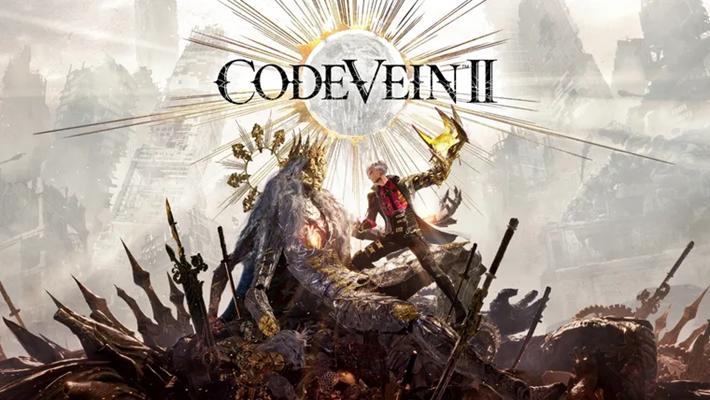
Bandai Namco Entertainment Korea released the Code Vein 2 Korean version prologue trailer in December, showcasing the action RPG’s ambitious time-travel mechanics and revealing why this anime game could capture the explosive Asian market where the original sold over 4 million copies worldwide.
The timing matters. South Korea’s gaming market will reach $21 billion by 2026, growing at 6.21 percent annually, while the country’s RPG segment alone commands $49.5 billion in value.
Meanwhile, Bandai Namco positions its sequel to capitalize on the soulslike genre, expanding from $1.5 billion in 2024 to $3.2 billion by 2033. This 9.2 percent compound annual growth rate validates the publisher’s multimillion-dollar investment in development. This strategic outlook should inspire confidence in the game’s market prospects.
Why Time Travel Mechanics Change Everything
Unlike surface-level sequels, the action RPG introduces temporal manipulation as its core gameplay pillar rather than cosmetic storytelling. Players control a Revenant Hunter resurrected by Lou MagMell, who sacrifices half her heart to forge a blood bond with the protagonist.
Lou possesses the ability to “jump” through time by tracing spiritual echoes called Pathos, enabling players to travel 100 years into the past to rewrite the destinies of legendary vampires who once sealed the apocalyptic “Rinne” phenomenon. This innovation aims to excite industry professionals and gamers about the game’s unique mechanics.
This mechanic transforms player agency. Past choices directly reshape the present timeline, creating branching consequences that extend beyond simple dialogue trees. Director Hiroshi Yoshimura emphasized the game occupies “a completely different world” from the 2019 original, featuring an entirely new cast while retaining the anime game aesthetic that built the franchise’s cult following.
Furthermore, the system addresses a critical weakness in the original: repetitive exploration. By allowing players to navigate both present and past versions of the exact locations, the time-travel mechanics effectively double the explorable content while maintaining narrative cohesion.
The Korean Market Strategy Behind the Prologue Trailer
The Korean market strategy includes comprehensive localization, such as fully supported language options across PlayStation 5, Xbox Series X|S, and Steam, directly addressing the preferences of 65 percent of gamers who favor locally translated content, thereby boosting consumer confidence.
Additionally, the Korean release offers exclusive pre-order bonuses, including the “Rune-Inscribed Set” featuring the Twin Fangs of the Lone Wolf dual swords. The company released a physical limited edition containing an 18-centimeter Lou MagMell figurine, 60-page artbook, and a metal steelcase, catering to Korea’s robust collector culture where physical gaming merchandise generates $2.8 billion annually.
Branch Manager Jang Tae-geun oversees the Korean rollout, coordinating January 29 console launches and January 30 Steam releases to maintain global parity.
Blood Economy Combat System Separates Winners from Pretenders
The action RPG implements a sophisticated resource management system, distinguishing it from button-mashing competitors. Players must wound enemies to induce bleeding, then execute “drain attacks” to extract Ichor, the supernatural resource powering “formae” abilities. This creates intentional combat pacing: strike, drain, deploy powered skills, repeat.
The prologue trailer demonstrates five distinct companion characters, each offering unique “drain attack” types. Lou MagMell deploys “Bat” drains for Ichor recovery, while Iris uses “Reaper” attacks, granting defense bonuses. Josée Anjou’s “Hound” drains accelerate skill activation speed, and Lycoris employs “Ivy” attacks, boosting elemental damage.
Moreover, the new “Burden System” introduces meaningful trade-offs in equipment. Equipping weapons and armor imposes statistical penalties on character attributes. Exceeding thresholds triggers both benefits and penalties, overladen characters gain power but lose mobility, shifting from quick dodges to slow heavy rolls.
The action RPG transforms AI followers into strategic resources through dual-combat modes. In “Summoning” mode, partners fight independently while triggering substantial cooldowns, creating high-risk decisions about when to invoke assistance. Conversely, “Assimilation” mode merges partners with the Hunter, dramatically boosting stats but consuming Link Points.
Notably, the LP system prevents trivializing difficulty. Damage depletes LP before health, and breaking the bond costs access to the partner’s “Link Traits,” which provide combat advantages.
The prologue trailer showcased MagMell, the underground hub where players deepen companion relationships through preference gifting and character-specific quests. Strengthening bonds unlocks exclusive items, combat abilities, and narrative branches.
Market Positioning Against Saturated Competition
Bandai Namco faces a crowded January 2026 release window. The Seven Deadly Sins: Origin launches January 28, targeting similar anime game audiences. Final Fantasy VII Rebirth‘s multiplatform expansion continues throughout early 2026, competing for market share. Meanwhile, multiple anime game releases crowd the seasonal calendar.
Building on the original game’s strong debut with 60,843 copies sold in Japan’s first week and over four million global sales, the sequel leverages franchise momentum to anticipate similar or greater market success, addressing concerns about market acceptance.
The sequel’s expanded weapon arsenal strengthens its competitive position. Bandai Namco introduces Rune Blades—colossal spell-infused weapons specializing in elemental attacks—and Dual Swords emphasizing rapid combos. These join returning weapon types, including one-handed swords, bayonets, halberds, and great hammers. Each weapon accommodates four unique formae across combat, magic, and support categories.
Edition Strategy Maximizes Revenue Extraction
The publisher implements tiered pricing targeting different consumer segments. The $69.99 Standard Edition provides access to the base game with modest pre-order bonuses. The $89.99 Deluxe Edition adds three costume sets, the “Mask of Idris” expansion DLC, and 72-hour early access beginning January 27. The $99.99 Ultimate Edition includes six original Code Vein character costumes, plus a digital artbook and soundtrack.
Premium collectors target the physical Collector’s Edition featuring all digital content alongside the Lou MagMell figurine, hardcover artbook, and metal steelcase. This pricing ladder mirrors successful strategies from Elden Ring, which generated 40 percent of first-month revenue from premium editions despite representing only 18 percent of unit sales.
Significantly, the Mask of Idris expansion arrives by January 2027, introducing new narrative threads, additional companions, and unexplored temporal rift realms.
To ensure the game’s success, emphasize how ‘time travel mechanics’ and the ‘blood economy combat system’ uniquely position Code Vein 2 against competitors, alleviating concerns about market saturation and demonstrating its innovative edge.
Why This Game Succeeds Where Others Fail
Three factors position the Code Vein 2 Korean version for commercial success. First, the time travel mechanics provide genuine innovation rather than incremental improvement. Second, the blood economy combat system creates skill-based progression that satisfies both casual players and hardcore enthusiasts. Third, the companion relationship depth delivers emotional investment beyond gameplay mechanics. These elements aim to build trust in the game’s quality and appeal.
The Korean gaming market particularly values these elements. Research indicates Korean RPG players prioritize “immersive storytelling” and “character development” above graphical fidelity, with 73 percent of survey respondents ranking narrative quality as their primary purchase driver.
The anime game aesthetic appeals to Korea’s established otaku subculture, while the Soulslike difficulty appeals to the competitive gaming demographic.
Moreover, Bandai Namco’s willingness to delay launches for quality improvements builds consumer trust. The company invested an additional year polishing the original after internal evaluations identified deficiencies. That discipline separated the game from rushed competitors and established franchise credibility.
The prologue trailer reveals production values matching AAA standards. Character models showcase detailed textures and fluid animation, while environmental design demonstrates artistic cohesion across both time periods.
Ultimately, this action RPG succeeds by respecting player intelligence. The game trusts audiences to master complex systems rather than simplifying mechanics for mass appeal. That philosophy resonates particularly strongly in Asian markets where skill-based progression drives engagement metrics.
As Korea’s gaming market continues expanding toward $21 billion annually, titles offering depth, innovation, and polish will capture disproportionate market share, precisely where this sequel positions itself.
Get the hottest news on upcoming game releases, patch updates, and gaming industry trends, stay updated with KoreaGameDesk on Twitter, Facebook, Instagram and Linkedin
More from us:
- Softon Entertainment’s classic horror RPG game Dark Eden has over five million fans worldwide
- Newcore Games Set to Dazzle at Gamescom with ‘The Devil Within: Satgat’
- Top 10 Gaming Companies In South Korea
- Challengers Games Unveils ‘Second Wave,’ a Fusion of Cultures and Gameplay at Gamescom
- Level Up Your Gaming Experience, Discovering the top 10 Hottest Video Games