

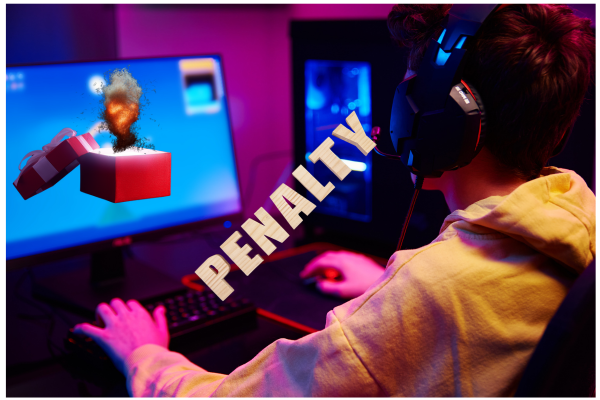
South Korea Loot box penalties will now hit game publishers immediately under the new gaming regulation that imposes penalty enforcement without warning, marking the world’s strictest consumer protection regime for probability disclosure violations.
Rep. Kim Seong-hoe of the Democratic Party of Korea (Chair of the Special Committee on Games) introduced the amendment to South Korea’s Game Industry Promotion Act on December 23, triggering seismic shifts across the global gaming industry.
The legislation eliminates the grace period that currently resolves 95 percent of violations through corrective requests, instead authorizing immediate surcharges of up to 3 percent of annual sales or Korean Won (KRW) 1 billion or $700,000 the moment regulators discover non-compliance.
This radical transformation positions South Korea as the first jurisdiction to weaponize direct financial penalties against loot box deception, forcing international studios to choose between iron-clad transparency or abandoning the world’s fourth-largest gaming market worth $14.6 billion.
Presidential Directive Drives Legislative Blitz
The amendment directly responds to President Lee Jae-myung’s December 16 directive, delivered during policy briefings with the Game Rating and Administration Committee (GRAC). Lee criticized the existing enforcement system as “pleading with operators” and argued that criminal penalties, which carry prison sentences of up to two years but require lengthy trials, fail to deter misconduct.
Instead, Lee demanded “financial treatment” that “fundamentally strips away unjust gains,” explicitly instructing regulators to impose surcharges upon detecting violations rather than waiting for non-compliance with correction orders.
“Companies violate because the expected profit exceeds the penalty,” Lee said, according to transcripts published by Inven, a leading Korean gaming outlet. “We must make deception economically irrational, not just illegal.”
This presidential intervention follows months of escalating enforcement. Since August 2025, GRAC has deployed 27 dedicated monitoring personnel, nearly one-third of its 99-person workforce, to conduct real-time surveillance of loot box mechanics across 1,255 games subject to mandatory disclosure laws enacted on March 22, 2024. That monitoring revealed 266 violations (a 21.2 percent non-compliance rate), with foreign-developed games accounting for 60 percent of the infractions.
The Economics of Immediate Punishment
Under current law, game publishers who fail to disclose loot box probabilities face corrective requests first. Only publishers who ignore these warnings receive criminal referrals or face service suspension. Out of hundreds of violations detected since March 2024, just eight cases progressed to prosecution or blocking orders.
This “warnings-first” approach created perverse incentives: publishers could test non-compliant monetization, profit during the warning period, then correct violations without meaningful penalties.
The December 2025 amendment obliterates this calculation. Article 38-2, newly inserted into the Game Industry Promotion Act, establishes immediate surcharge authority targeting “unjust economic gains.” Critically, the penalty applies at the moment of discovery, publishers cannot avoid sanctions by rapidly implementing corrections after detection.
For context, Nexon paid KRW 11.6 billion ($8.9 million) in January 2024 for intentionally manipulating loot box odds in MapleStory, but that fine required months of investigation by the Fair Trade Commission and formal proceedings. The new framework enables equivalent-scale penalties through administrative action within weeks of discovery, radically shortening the enforcement timeline.
Why Korea’s Market Position Forces Compliance
International publishers cannot simply exit Korea to avoid these regulations. The Korean gaming market generates $14.6 billion annually, with mobile gaming comprising $6.77 billion (56.3 percent of total). Korean gamers spend over $450 per capita annually, which is nearly triple the Asia-Pacific average of $154, making the market strategically indispensable for monetization-dependent studios.
Moreover, Korea serves as a regulatory bellwether. When Belgium banned loot boxes as gambling, publishers simply removed mechanics from that small market. Korea’s size and influence make such easy circumvention unlikely. Major studios, including Tencent, NetEase, EA, and Activision-Blizzard, all maintain significant Korean operations, with localization investments averaging $28,000-30,000 per language plus 20 percent regulatory compliance overhead.
The October 23, 2025, requirement for foreign publishers to appoint local legal representatives compounds this burden. Companies with annual Korean sales exceeding KRW 1 trillion ($693 million) or 100,000+ monthly active users must now designate domestic agents personally liable for compliance violations. This transforms Korea from a market-side operation into one requiring direct legal accountability, effectively creating hostages for enforcement.
Global Regulatory Race Accelerates
South Korea’s aggressive stance comes amid worldwide scrutiny of loot boxes. The European Parliament voted in October 2025 to urge the European Commission to ban loot boxes in games accessible to minors, while the US Federal Trade Commission secured a $20 million settlement from HoYoverse (Genshin Impact) in January 2025 for underage sales violations. Belgium and the Netherlands already classify certain loot boxes as illegal gambling, forcing market removal.
However, South Korea’s model differs fundamentally. Rather than outright bans (Belgium) or industry self-regulation (UK, where only 8.6 percent of top-grossing games comply with voluntary disclosure guidelines), Korea implements mandatory transparency backed by immediate economic penalties. This positions Korean regulation as the template for jurisdictions seeking middle-ground approaches: allowing loot boxes while punishing deception severely enough to enforce honesty.
Research from the University of York analyzing South Korea’s March 2024 law found 84.4 percent disclosure compliance among top-grossing games, dramatically higher than the UK’s self-regulatory 8.6 percent, despite similar legal requirements. The difference? Active enforcement. Korean regulators don’t just mandate disclosure; they monitor 24/7 and punish violations, whereas UK authorities issue guidelines and then rely on industry goodwill.
Publisher Responds as Battle Passes Replace Gacha
Facing mounting regulatory pressure globally, publishers increasingly shift toward alternative monetization. Battle passes and seasonal recurring purchases with defined cosmetic rewards now dominate free-to-play games, generating predictable revenue without randomization or probability disclosure requirements.
Games like Overwatch 2 (which removed loot boxes in 2022) and Fortnite demonstrate that transparent pricing sustains revenue while eliminating regulatory exposure.
This monetization pivot reflects rational economics. A battle pass priced at $10-20 generates recurring quarterly revenue from the player base, drives engagement through time-gated content, and avoids loot box compliance infrastructure.
For publishers operating across multiple jurisdictions with divergent regulations, Belgium’s ban, Korea’s disclosure + penalties, China’s purchase restrictions, and US state lawsuits, standardizing on compliant mechanics reduces legal risk and localization costs.
Korean publishers especially benefit from domestic regulatory alignment. Nexon and Krafton already navigate GRAC enforcement practices and maintain compliance infrastructure, creating a competitive advantage over foreign studios unfamiliar with Korean specifics. The 60 percent foreign-game violation rate demonstrates this informational asymmetry: international publishers systematically underestimate Korean enforcement intensity until they face penalties.
Implementation Challenges and Industry Pushback
Despite government determination, technical challenges complicate enforcement. Modern loot box systems employ sophisticated algorithms that include conditional probabilities (e.g., increasing odds after consecutive failures), dynamically adjusted rates based on player behavior, and multi-layered randomization. Regulators must decode game code to verify that disclosed rates match the actual implementation, a resource-intensive process that requires specialized technical expertise.
Additionally, distinguishing intentional manipulation from implementation bugs matters legally. The January 2025 amendment shifted the burden of proof to publishers, requiring them to prove violations were unintentional.
However, minor discrepancies between disclosed and actual rates could stem from rounding errors or algorithmic edge cases rather than fraud. How aggressively GRAC applies maximum penalties (3 percent sales vs. KRW 1 billion) for varying violation severity will shape industry compliance strategies.
Industry representatives warn that excessive enforcement could reduce the variety of games available to Korean players. Smaller international studios unable to afford Korean compliance infrastructure, legal review, local representatives, and ongoing monitoring may avoid the market entirely, concentrating access among well-capitalized publishers. This creates tension between consumer protection goals and market diversity.
What Founders and Investors Should Know
For game studios planning Korean launches, the regulatory environment now demands:
Technical Infrastructure: Implement auditable probability systems with transparent logging and player-facing displays that meet GRAC visibility standards, with a budget of $50,000-100,000 for initial compliance architecture and ongoing monitoring.
Legal Positioning: Appoint qualified local representatives with game-industry expertise. Penalties attach personally to these agents, making selection critical.
Monetization Strategy: Consider battle pass or cosmetic shop models for Korean versions rather than gacha mechanics, even if loot boxes drive revenue elsewhere. Compliance costs may exceed profit margins on probability-based items.
Timeline Awareness: The amendment is likely to take effect within 6-12 months, pending approval by the National Assembly. Studios with active Korean operations should audit probability disclosures immediately, corrections before enforcement avoid penalties, but post-discovery fixes are no longer shielded from surcharges.
For investors evaluating gaming companies, Korean regulatory exposure now represents material risk. Publishers generating less than 10 percent revenue from Korea face potential liability equal to 3 percent of those sales annually across their game portfolios.
Companies with established compliance infrastructure (Korean majors, compliance-forward Western publishers) command valuation premiums compared with studios that treat regulation as an afterthought.
As a broader strategic implication, Korea demonstrates that active enforcement, and not just regulation on paper, drives compliance. As the EU, Japan, and other APAC markets consider similar frameworks, Korea’s penalty-backed model offers proof of concept that mandatory disclosure works when governments commit resources to monitoring and punishment.
Publishers optimizing for long-term viability must anticipate global regulatory convergence toward Korean-style enforcement, making transparency infrastructure an operational necessity rather than a regional accommodation.
Get the hottest news on upcoming game releases, patch updates, and gaming industry trends, stay updated with KoreaGameDesk on Twitter, Facebook, Instagram and Linkedin
More from us:
- Unleash your inner hero with Alterium Shift on Steam’s early access
- Hackers Target Call of Duty Gamers with Malware: Activision Investigates and Unveils Clever Tactics
- WeMade partners with Nine66 to boost the Saudi Arabian gaming industry
- Netmarble Witnessed A 7% Revenue Growth For The First Quarter Of 2021
- BLENS Wows Gamescom 2023 with Innovative Cross-Platform VR Game, OctoRaid